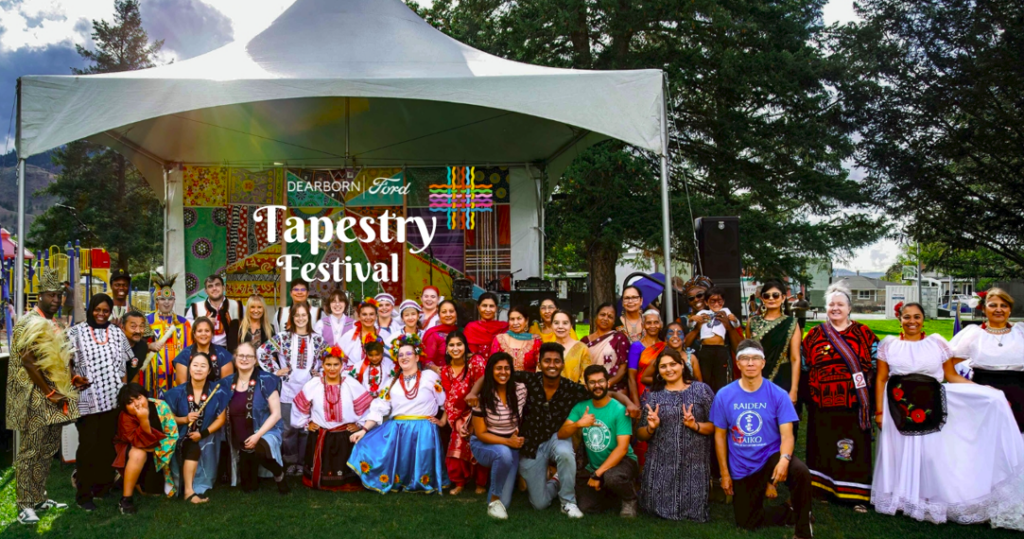
Image sourced from the official Tapestry Festival 2024 website.
My experience within the Human Rights and Social Justice program at TRU has been a major component of experiential learning. These opportunities contrasted with learning in a traditional classroom setting because they enabled me to be directly involved with communities and involved in activities that further enhanced my knowledge in the area of social justice, human rights, and cultural awareness. These experiences helped me not only to study academic ideas but also to discover the real life experiences of communities, the relevance of relationships, and the role I have to play as an ally and advocate.
The use of the Human Rights and Social Justice Club as an executive member has been one of my most important experiences in experiential learning. I was able to assist with club activities, assist in the organization of events, and meet different students in this position. This experience enabled me to acquire practical skills in leadership, advocacy and community participation. I also acquired the skills of how to engage people in discussing sensitive issues, how to be able to listen to a variety of opinions, and how to provide inclusive environments to have a dialogue. The teachings reinforced my belief in action and encouragement of others to act and fight in social justice.
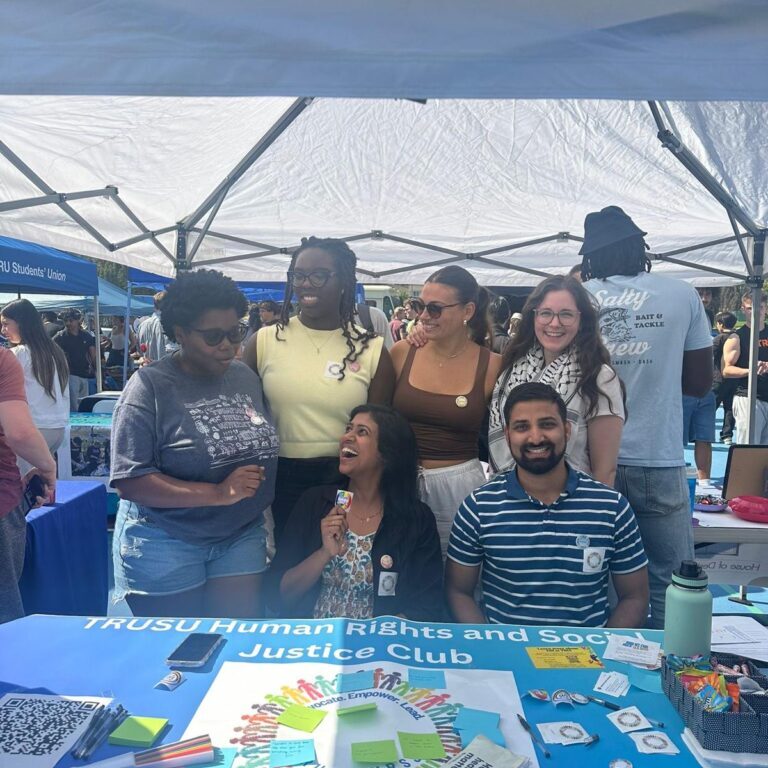
Group photo of HRSJ club members during clubs day, 2025
Volunteering also offered another opportunity to learn practically. In the Indigenous Heritage Museum, I implemented my education by engaging in learning with knowledge keepers and community members, about the history and the culture of traditions and resilience of the Secwépemc people. This was an experience that was transformative since I was able to know about culture and history not only by reading but also by interacting and observing it. Also, the experience of the Guinness World record attempt with Zainab Afro Fusion taught me about the collaboration of the community, working as a team, and celebrating culture. These experiences made me understand the power of social interactions and active involvement in communities because it can improve inclusivity and make communities stronger.
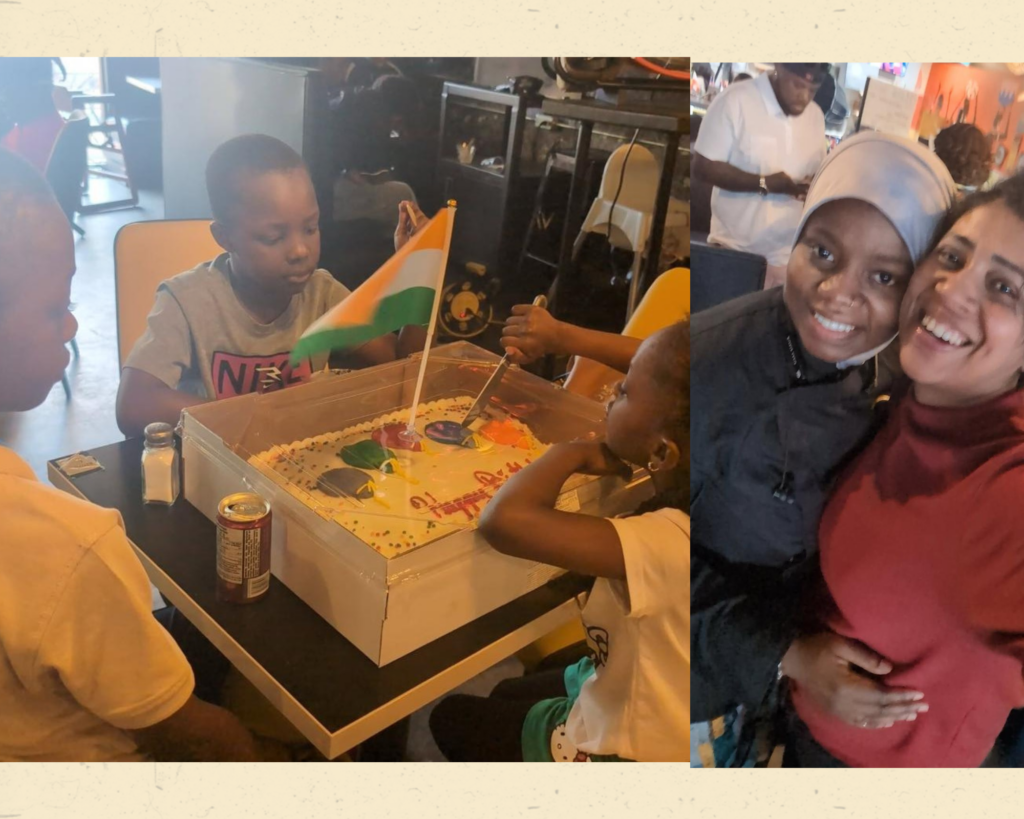
Photo captured during Afro Fusion Meals volunteering for the Guinness World Records event (2025).
One of the most memorable learning activities that I underwent was my encounter with the Secwepemc Elders and knowledge keepers. Reading their histories and their words, one can stress the necessity of forming connections with the land, the community, and even history itself. The experience of the visit to the Kamloops Residential School was particularly significant because it provided me with an opportunity to observe how settler colonialism and systemic violence continue to affect the Indigenous communities. Such experiences made me think about how I was an outsider as a person of India and how I needed to be humbled by this work, respectful, and culturally sensitive.
The creative expression was another avenue I used to experience learning. In my sketch about settler colonialism, I painted a canvas painting to express my respect towards the Indigenous people and emphasize on the need to appreciate cultural backgrounds. The project enabled me to visually express intricate concepts, which illustrates the way imagination can be used to convey ideas, create understanding and provide advocacy. This process enabled me to relate abstract information regarding colonialism, resilience, and cultural respect with a real-life, personal work.
My experiential learning was also enhanced by field visits to, among others, Food Sovereignty Garden, Butler Urban Farm, The Stir, and the local art galleries. These engagements demonstrated to me the practice of food systems, community care and grassroots activism. I was able to see how communities struggle, such as the lack of resources and systemic pressure, and I also saw how people can be innovative and strong as well as the power of action. These events enabled me to relate theory to practical examples, which affirmed the role of participation and advocacy in human rights activities.
These experiences have taught me that experiential learning is active and reflective. Every volunteer project, field visit, or creative project provided me with a reason to question my assumptions, reflect on multiple perspectives, and realize the social systems at large operating on communities. These prospects made me stronger in my desire to engage in human rights and social justice work with empathy, respect, and cultural humility. They taught me that I am not confined to classroom to learn, but I can achieve it through participation, interaction, and observation.
On the whole, my experiential learning at TRU has changed me. Through volunteering, meeting with Elders, attending community events, and sharing ideas through art, I have been able to better understand the concept of social justice, cultural respect, and the role of an advocate. I have grown up and followed my career path with these experiences, understanding that my work as a human rights practitioner should be active, thoughtful, and focused on building inclusive and fair societies.