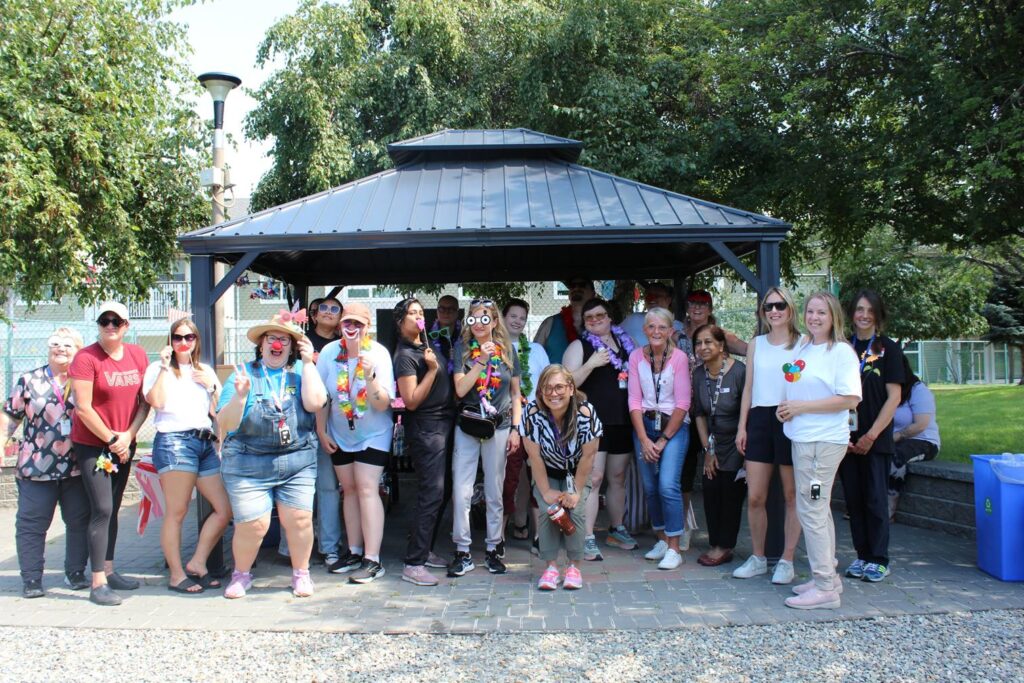
Group photo after the South Hills Carnival Event (2025).
My practicum experience at the South Hills Tertiary Psychiatric Rehabilitation Centre has changed my life, as it has given me a better insight into human rights and social justice in a mental health care facility. Placing in position in which individuals with long-term psychosocial rehabilitation requirements were supported enabled me to get past observation and engendered in client-centered care. I helped clients with their every day activities, participated in staff meetings and training, and watched how the ethical, intercultural, and therapeutic practice is implemented in general. Gradually, I became more than a just observer, becoming more active, offering my ideas, assisting clients in their work, and critically evaluating the overlap of empathy and professionalism.
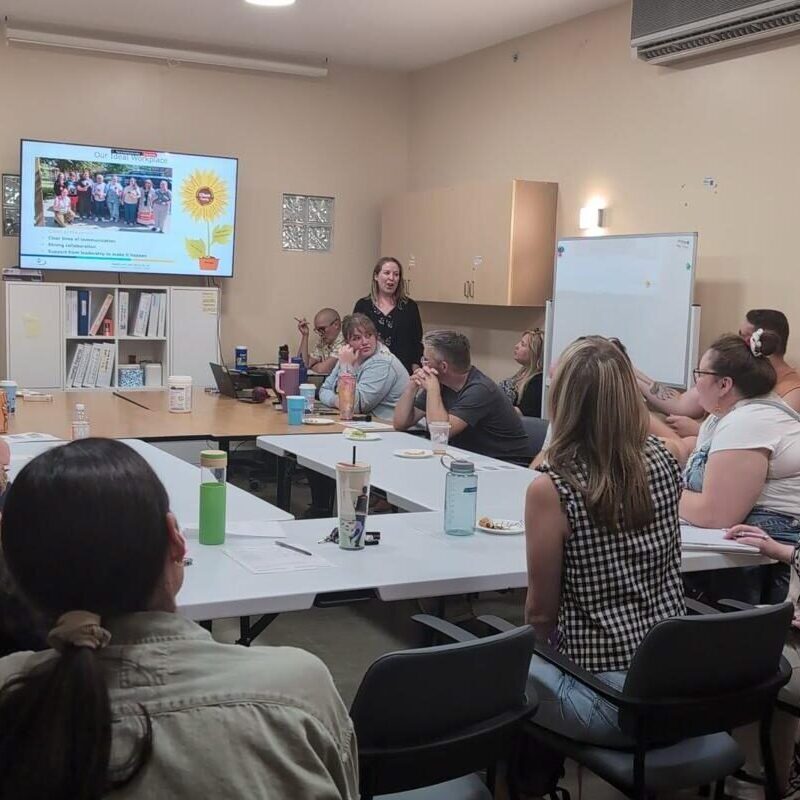
Photo by the author, South Hills Tertiary Psychiatric Rehabilitation Centre (2025).
When I began my placement, I started working on the concept of applying the principles of human rights and social justice in the mental health setting. I observed how the staff treated their clients by observing their interactions with clients and the types of decisions they made based on dignity, fairness, and respect towards their clients in terms of their autonomy. The experience of working in groups and working with clients directly enabled me to observe the systemic barriers to recovery, including housing insecurity, stigma, and social isolation. The attendance of staff meetings and participation in discussions enhanced my confidence in representing clients and effective communication. Supervision taught me to address the ethical issues, utilise theoretical knowledge in practice, and build the intercultural competence, which strengthened my conviction in the way human rights are entrenched in the daily practice in psychiatric rehabilitation.
One of the most memorable parts of my practicum was community-focused events; during one of the events, clients, staff, and participants of mental health and substance use community programs gathered to socialize and play games in a carnival-like event. This was an eye opener as recovery is not just a clinical but also social and relational process. Seeing clients feel happy, connected, and belonging prompted a key discovery that the notion of human rights in mental health goes beyond access to the care, which implies dignity, autonomy and meaningful inclusion in the community life.
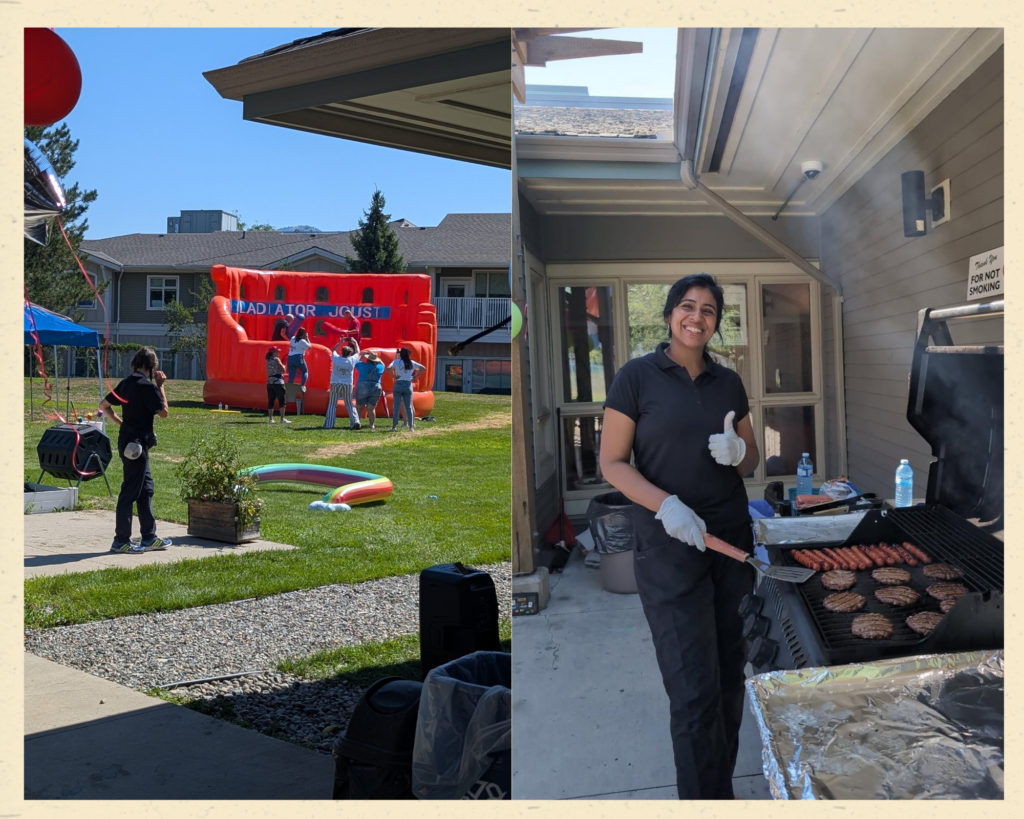
Photograph from the South Hills Carnival Event, captured by the author and a colleague (2025).
Another aspect that the practicum taught me was interdisciplinary collaboration and networking. I interacted with psychiatric nurses, rehabilitation workers, case managers, and support staff and saw how teamwork contributes to the client-centered care. The information about community partnerships and harm reduction programs, as well as cooperation with Interior Health, expanded my knowledge on resources and approach towards helping people living with psychiatric diagnoses. These experiences have supported the linkage between the theory of the classroom and its practice in the real world, demonstrating how the principles of social justice and human rights work in the complex systemic environment.
Learning opportunities were also difficult at the practicum. First, I had a problem with reacting to sensitive scenarios, including assisting the clients who are in distress or withdrawal. With help of supervisors, I also came to understand that I did not have to possess all solutions but I could be effective by listening, being compassionate, and referring clients to the necessary help. I also got to know how to maintain my emotional reactions, how to balance the empathetic and the professional. These teachings enhanced my strength, emotional awareness, and resolution to do what is right in the face of stress.

Photograph taken at South Hills Tertiary Psychiatric Rehabilitation Centre, Kamloops, BC (2025).
Going back to this practicum, I would have to say that it has helped me very much in shaping my professional identity and defining my career. I also found out by myself that human rights and social justice are not abstract ideas, as they are put to life by everyday care, respect, and inclusion practices. The knowledge and skills that I have gained, which include those of trauma-informed care and harm reduction, have equipped me to be ethical, accountable, and culturally aware in the field of mental health. These experiences were well supported by my coursework that provided me with frameworks and perspectives that I could apply in the real world and the practicum, in its turn, supplemented my theoretical concept mastery with practice.
Eventually, this placement cemented my resolution to incorporate mental health practice with human rights and social justice. It has motivated me to follow a career that will enable me to uphold the dignity, autonomy, and well-being of patients with psychiatric care needs to make sure that care is inclusive, relational, and based on the principles of ethics. The practicum has shown that a powerful social justice is implemented in action, contemplation and practice and has had a significant impact on my personal development and my career goals.