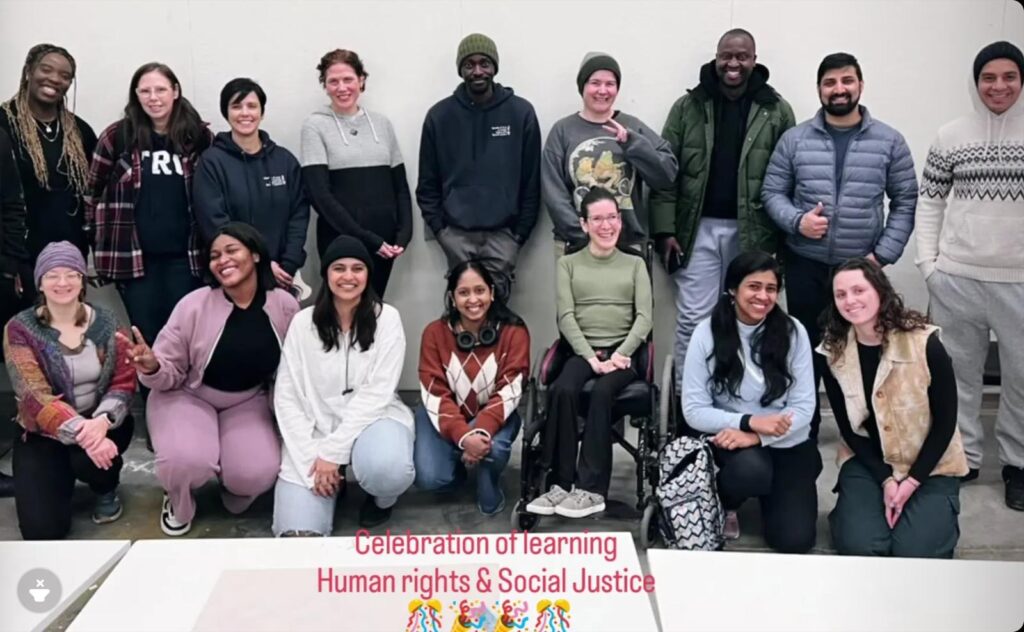
Over the years I have been in this program both in the mandatory courses and electives I have grown in more ways than the formal learning outcomes. This program was not just an academic space but an experience which I could learn through relationships and shared experiences, through honesty and frank conversations and through day-to-day presence of people who contributed varied histories and identities in the classroom. The growth that I went through does not stay within books or homework; it affects the way I conduct myself within the world, the manner in which I perceive responsibility, and the way I perceive human dignity, care, and justice in my day-to-day life.
Demonstrate knowledge, through experiential learning, of key human rights and social justice issues locally, nationally, and/or globally.
Among the most valuable things I learned is associated with the cultivation of knowledge using the method of experience. The practicum experience in the south hills psychiatric rehabilitation center influenced my understanding of human rights in practice significantly. Such an experience demonstrated to me that mental health work cannot exist without social justice. I could observe the impact of such issues as poverty, discrimination, unstable housing, addiction, and trauma through which people could live their lives in a way that is not entirely described in academic texts.
Participating in staff meetings, helping with daily tasks, and watching harm-reduction models, as well as communication with clients, taught me that human rights can manifest themselves in small, everyday situations: in listening, respecting the decision of a person to choose, providing unconditional helping, and recognizing the dignity of each individual. Such encounters have opened my eyes on the extent to which people require emotional, social and structural support to restore their lives.
My volunteer experience at the Kamloops Heritage Museum added a different dimension to this PLO. This had a significant effect on me because I realized how history and memory influence our understanding of justice by accessing archives, stories of communities and exhibits. Stories are contained in museums which allow us to come to terms of who has been brought to attention and whose history has been suppressed. The work made me consider the human rights not only with crisis but also in the representative, cultural, and women’s collective memory.
This experience was further enhanced by reading about the ecofeminism and food justice by Vandana Shiva. It allowed me to relate what I did in Kamloops to what is happening back home in Kerala- particularly land, food, women work and resiliency of the community. It was all these experiences that taught me that human rights and social justice are practiced through actual individuals, society and narratives.
Demonstrate a sophisticated understanding of and respect for the values of a range of Indigenous knowledge and wisdom.
The other transformation that occurred to me was the respectful and considerate attitude toward the Indigenous knowledge systems. The experience in the Kamloops Indian Residential School site was a very significant one in my education. Physically present on such a land, aware of what had been done there, I came to the realization that Indigenous knowledge is based on lived experience, community memory, and constant resistance, and not only as academic ideas.
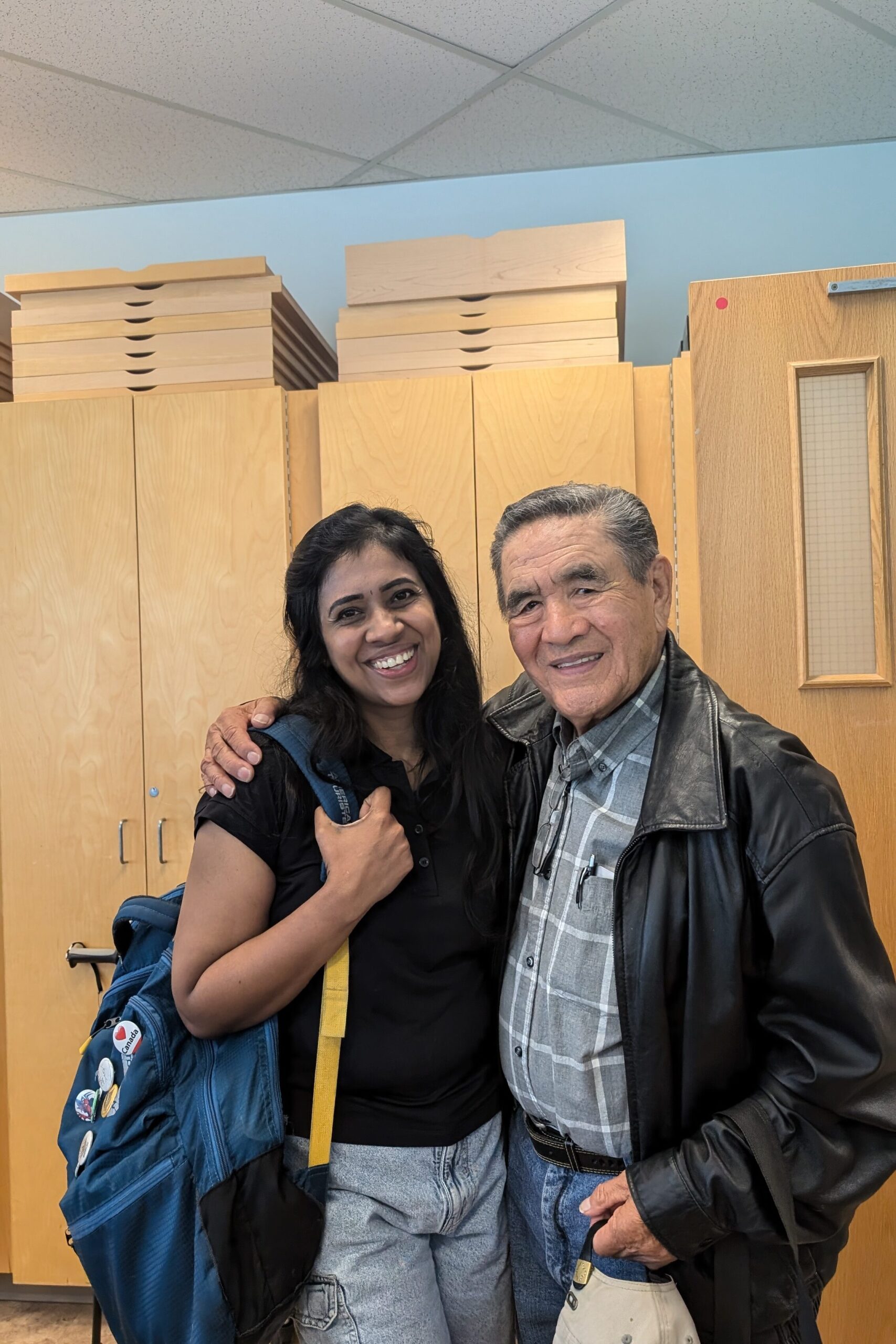
Photo with an Elder during the Indigenous Ways of Learning class (2024).
Such courses as Indigenous Ways of Knowing and Settler Colonialism assisted me in understanding that Indigenous philosophies prioritize relationships, namely, with land, with community, with ancestors, and with the natural world. These lessons helped me to change my conception of justice, which was individual and legal, to a long-term, relations-oriented, and collective way of justice.
This perception was also developed through my creative assignments. I used art to learn about such themes as memory, healing, and relationships with land. Work in art enabled me to share feelings and thoughts that cannot be easily conveyed by means of writing alone. It made me see that creativity may also be a kind of knowing and one of the methods to get closer to the knowledge.
The teachings of Vandana Shiva formed a connection between my life in Kerala and the Indigenous worldviews in Canada. Her seed sovereignty, ecological concerns, and the idea of women knowledge reminded me of the wisdom of women in my family (more specifically my grandmother). This relationship made me realize that there are Indigenous ways of knowing in all cultures albeit in different forms.
Demonstrate leadership in recognizing, respecting, and advancing the value of intercultural understanding and worldviews regarding human and environmental diversity.
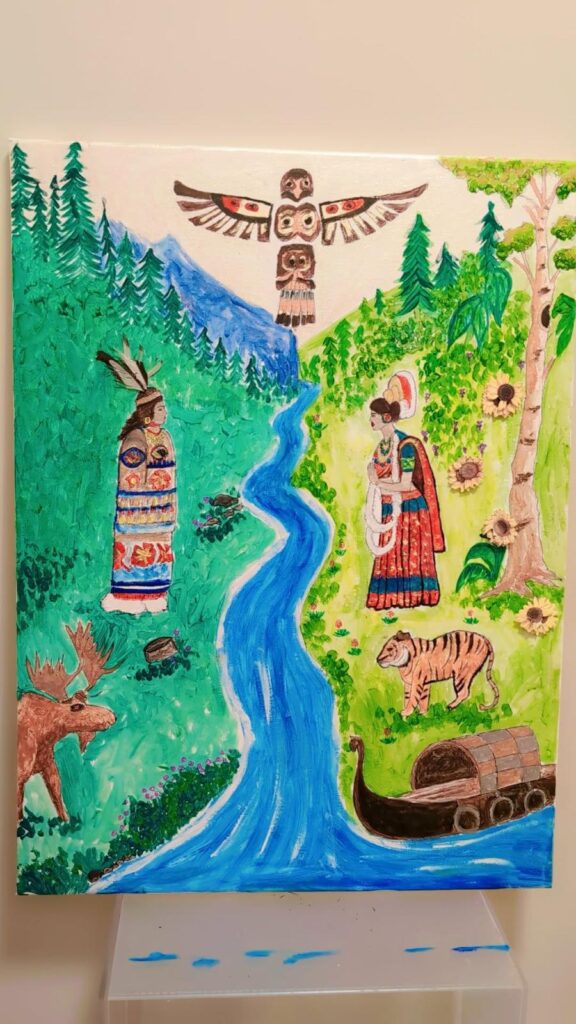
My Art work on settler colonialism
Being a female Indian nation of Kerala, who has been studying and living in Canada, intercultural learning has been of central concern in my experience. With the help of this program, I had numerous chances to learn more about diversity, not only regarding its nationality, but also regarding the views, experiences, life experiences, and perceptions of the world.
During class discussions, group work and presentations, I frequently contributed some experiences based on my individual experiences in Kerala, particularly in food, gender roles, family organization, and environmental issues and the practice of the communities. Concurrently, I learned how to be open-minded when listening to others. I was particularly sensitive to the discussions on migration, belonging, and emotional burdens of people that they bear, being outside of my home and not seeing my children or husband.
The experience of my job at South Hills had to be culturally aware when dealing with clients of various backgrounds, ages, and abilities. I got to know that being a leader in intercultural spaces is not about possessing the answers, but being patient, feeling aware, and respectful of the various lived realities. In the museum, I was taught how to assist the visitor in working with complicated histories. This experience made me to value the role of storytelling and representation in forming the perception of people about themselves and others. Attending the Tapestry Festival 2024 strengthened this learning even more. The festival brought together diverse cultural stories, performances, and community voices. Seeing how different groups shared their histories through art, food, and traditions reminded me that representation is not only educational it is a form of empowerment. The festival helped me understand that creating spaces where people can express their stories with dignity is essential for building more respectful and inclusive communities.
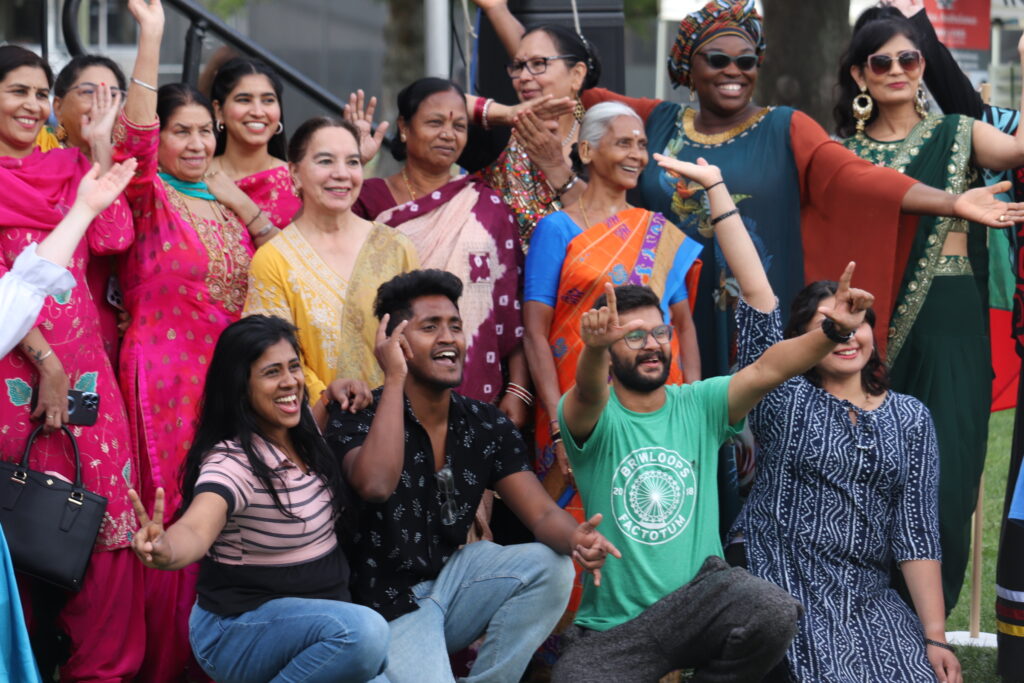
Image sourced from the official Tapestry Festival 2024 website.
In all my classes, including genocide studies, food justice, settler colonialism, arts and dissent, and the roots of human rights, the experience of my classmates helped me most. Their backgrounds of different places and identities made me realize that human rights action is constructed via community and learning among them. Such discussions usually lingered in my mind long after the classes, and they made me think and learn more.
Conclusion
This has been a life changing program in my life. It pushed me, comforted me and pushed me to develop on both academic and personal level. It helped me learn how to be a critical thinker, how to respectfully interact with different worldviews, and how to see justice as a relationship-based, caring and communal practice.
All the discussions, field visits, thoughts, creative projects, and times of vulnerability all helped me become a better version of myself: a more caring, considerate, and self-assured human rights and social justice practitioner. I can say it was a great experience, the people who influenced, and how I have come to know to not be ashamed of my cultural origins as I further practice my profession in Canada.